[Right, it's time to deal with this backlog of writing, apologies again for my sporadic blogging.]
Ed Balls is a man who is either possesses the most incredible sarcastic wit or is utterly deluded & incredibly dangerous:
"we need another fair tax on bank bonuses to get people off the dole and into work. It's the best way to get the deficit down"
A statement straight from the horses arse, but I just can't seem to get my head around it. Does Balls honestly propose that a tax (an oxymoronic "fair tax" at that) will help youth unemployment and deal with the deficit? I suppose his idea is to pillage money from the banks, kindly impart some of it to the unemployed in a way which encourages them to work (if he's found some miraculous cure for the welfare trap then I'd very much like to hear it) and then tax the new workers to sellotape over the crevasse in the public purse.
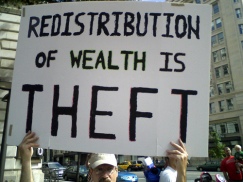
Such a ridiculous idea doesn't even stand up in theory, let alone when put into practise by the monstrously inefficient state. Firstly, tax never encourages growth! The Keynesian redistribution theory is nonsense, taking money from Person A's earnings (potential future investments) and using it to employ Person B does not produce any extra growth. What Balls fails to understand is that Persons A's capital will either be spent in the way required by him (pumped back into the economy creating useful employment) or saved/invested in a way in which he secures the best result (Milton Friedman, you look after your own money best). Either way Person A's earnings are being used in a fairly efficient manner, providing goods for himself and thereby employing people to provides these goods or tucked away to save/invest in a project which will produce a healthy return, which again is quite likely to produce sustainable employment for someone else at some point.
Regardless of whether we talk about taxing individuals or companies, either way you end up taking money from people and most likely the people at the bottom. Who does Mr Balls really think will end up bearing the brunt of a bank bonus tax, the banker who loses a small percentage of his earnings or the dry cleaner who depends on it for business? How does Ed think the economy will be better off when resources are no longer available to invest in new business ventures but instead we have subsidised factories churning out goods nobody wants? With this socialist nonsensical economics no-one wins, we are all made poorer either through tax or lost potential innovation. But I'm sure we'll all sleep soundly knowing we got revenge on the bankers 'ey?

No comments:
Post a Comment